

How to Keep Your Horse Sound

Soundness is something every horse owner worries about, whether you enjoy a weekend hack or compete at the top level. It only takes one niggle, one missed step, or just that feeling that something isn’t quite right to remind us how fragile it can be. Soundness isn't just something that happens to your horse, it's something you can actively build. With a greater understanding of how his body works, and a few simple changes to how you care, ride, and train him, you can strengthen the structures that keep him going, and give him the best chance of a long, active life.

Posture matters more than many riders realise
Good posture is the foundation of a healthy musculoskeletal system. Get it right, and you'll see it in how your horse moves, behaves, and performs. You'll also see it in his soundness. Get it wrong, and problems tend to follow.
I like to explain this with a simple tensegrity model. I use this a lot in my demos and courses to explain what good posture is. The model is made up of pieces of wood for bone, pieces of elastic for muscle, tendon, ligament and fascia. When a horse has good posture, there’s symmetry within the musculoskeletal system and when the horse moves, there will be an even distribution of forces through the body.

If there’s poor posture, maybe an extended back position, or conformational asymmetry and there will be asymmetry within the movement. This results in an uneven distribution of load through the body, and potentially an increased risk of injury.
One of the most common poor postural positions I see is a slightly extended back. When the spine dips into that position, the bony projections along the top of the spine (the spinous processes) get pulled closer together. Increased force in that area means the bone responds by laying down more bone. Sometimes that's where kissing spines happens.
Young Horses Need Thoughtful Training
A three-and-a-half-year-old horse may look mature in some ways and is an age when many horses begin work, but many growth plates are still developing. The last growth plates to close are found in the neck, which means the way a young horse is worked can potentially influence posture and future development.
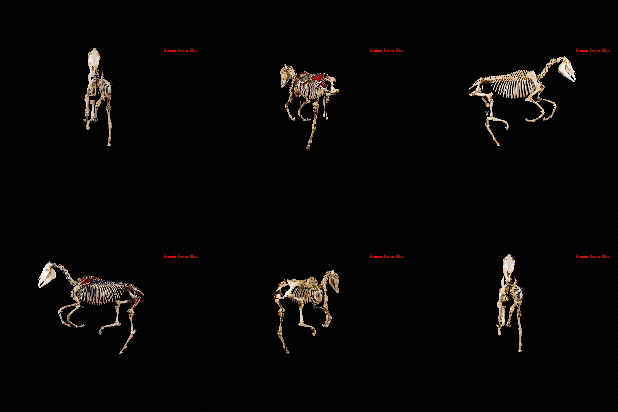
For this reason, training young horses should be gradual, precise and sympathetic.
Riders should pay close attention to symmetry, balance, posture and the type of work being introduced.
Movement Keeps the Whole Body Healthy
As most of you will know some of my favourite phrases include: "if you don't use it, you lose it," “to rest is to rust”, “motion is lotion” - I can’t stress how true this is. Regular movement through a joint's full range stimulates synovial fluid and it mobilises muscles, tendons, ligaments, fascia, affects tissue fluids, lymph, and circulation within the body.
However, effective movement doesn’t need to be dramatic. Carefully chosen exercises can encourage mobility, strength and coordination without overloading the horse. Raised poles, carrot stretches and controlled lateral work can all be useful when performed with precision.
Why Precision Matters
To train movement well, we need to understand what we are trying to achieve. For example, simply bringing the horse’s head around to shoulder level in a carrot stretch may not create much lateral flexion in the back. To influence the back and rib cage, the positioning needs to be more precise - and bring the head and neck further back.

Small details also matter during ridden and in-hand work. If a horse is turning on a small circle, keeping the front feet moving encourages more lateral bend and rib movement than allowing the horse to plant the forefeet. These seemingly minor adjustments can make exercises more effective and more biomechanically useful.
Assess Posture Regularly
Horses are excellent at compensating for discomfort, which means subtle changes can be easy to miss. I encourage owners and riders to develop a simple system for assessing posture and movement on a regular basis and not just when something goes wrong.
This could be as straightforward as taking regular photos and videos on a phone, then comparing them over time. The aim is to notice small changes early, before they become bigger performance or soundness issues.
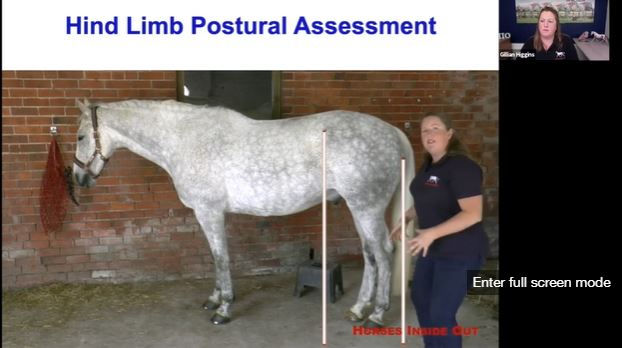
Adding rider weight also changes the horse’s posture, balance and muscle use. That makes it even more important to cultivate the best possible posture before getting on, especially for horses in development, returning to work or building strength.
Strength, flexibility and cardiovascular fitness all work together. This means that soundness depends on balance: the horse needs both flexibility and strength. Flexibility supports suppleness and range of movement, while strength provides control, balance and the ability to carry the body and the rider.
Core strength is more than abdominal tone. It includes the thoracic sling, pelvic and hip stabilisers, deep spinal muscles and lateral stabilisers. These structures help the horse maintain posture, balance and efficient movement.

To understand more about the importance of good posture, I highly recommend watching my on-demand recorded webinar Understanding and Assessing Your Horse's Posture. In it, I give you a clear and structured postural assessment system and how to determine what is good or bad posture. It also explains that by combining good management practices, in-hand exercises and correct riding, we can improve our horses musculoskeletal comfort, longevity, flexibility and efficiency.
Why Fitness Supports Posture
Cardiovascular fitness can also support posture because some respiratory muscles connect into the ribs and back. Strengthening these muscles helps support the rib cage, the area that carries the rider, and contributes to better overall back function.
Canter work can be particularly valuable when the horse is comfortable and ready for it. Unlike trot, canter creates moments where the abdominal muscles shorten on both sides at the same time. In that sense, it works a little like a sit-up: the horse has to engage through the body, lift through the back and use the core to control the movement. This makes canter a useful gait for developing strength, stability and better posture.
Raised Walk Poles
This is one of my favourite exercises. When introduced gradually and set up correctly, this exercise can mobilise joints, encourage the base of the neck to lift, promote rotational movement through the back and strengthen important core and stabilising muscles.

Raised walk poles can be done in hand or ridden, and for some horses they may even be incorporated into everyday routines, such as walking to and from the field. As with all exercises, accuracy matters: distances, height and the horse’s level of experience should guide how the exercise is introduced.
Key takeaways for soundness and longevity
· Prioritise posture before adding ridden workload.
· Assess posture and movement regularly using photos or video.
· Encourage varied movement to support joint and soft-tissue health.
· Use exercises with precision so they achieve the intended biomechanical effect.
· Balance flexibility work with strength and stability training.
· Develop cardiovascular fitness to support the rib cage, back and respiratory muscles.
· Introduce work gradually, especially with young or developing horses.
Keeping a horse sound is not about one single exercise or training method. It's about understanding how the whole body works together, recognising small changes early and building a programme that supports posture, movement, strength and welfare over time.


Valuable reminders and prompts! Thank you!