

Why Joint Mobilisations Belong in Every Horse's Care Routine

If there's one technique I return to again and again, whether I'm working with a top-level competition horse, a young horse at the start of its ridden career, or an older, retired horse - it's joint mobilisation. These are quiet, unhurried movements, but don't let that fool you. The effects they create throughout the body are anything but small.
Understanding What Joint Mobilisation Means
At its core, a joint mobilisation is a controlled movement guided through the mid-range of a joint's normal motion. There's no forcing, no pushing to the limit, just an encouragement of the natural movement the joint is designed to perform.
These techniques fall into two broad categories.
Active mobilisations are ones the horse performs himself, typically prompted by a food reward, a scratch, or a target.

A simple example of active mobilisation is encouraging a horse to lower its head in response to poll pressure, a treat, and eventually a voice cue alone.
It looks straightforward, but it's particularly valuable for posture and the joints at the base of the neck, and as a voluntary movement it carries different benefits to passive work.

Passive mobilisations are performed by the handler, who moves the joint for the horse and this requires both a relaxed, willing horse and a handler with solid anatomical knowledge and feel.
Some mobilisations blend the two approaches, drawing on elements of both.
The underlying principle behind all of it is this - movement drives the production and circulation of synovial fluid, the substance that lubricates and nourishes joint surfaces.
"Motion is lotion" isn't just a catchy phrase, it's a description of basic joint biology. Joints are built to move, and regular, appropriate movement is what keeps them healthy.
Joint Mobilisation Goes Beyond Just the Joint

Here's something that surprises people: joint health isn't only about cartilage and fluid.
Every joint sits within a capsule, is held by ligaments, driven by muscles, and woven into the wider body through fascia.
When any of those surrounding tissues become tight, restricted or dehydrated, movement suffers, even when the joint itself is structurally fine.
This is precisely why joint mobilisations are so useful as assessment tools, not just as maintenance. Moving through a joint reveals a great deal. Where does the movement feel free? Where does the body seem to be quietly compensating? These are questions we can often answer long before a problem becomes visible or the horse starts showing obvious signs of discomfort.
It's one of the reasons I've named my new online course, which starts in October, Joint Mobilisations and Musculoskeletal Testing, because these techniques don't just improve mobility; they help us identify which muscles and soft tissues are tight or underperforming.
The Nervous System Plays a Role Too
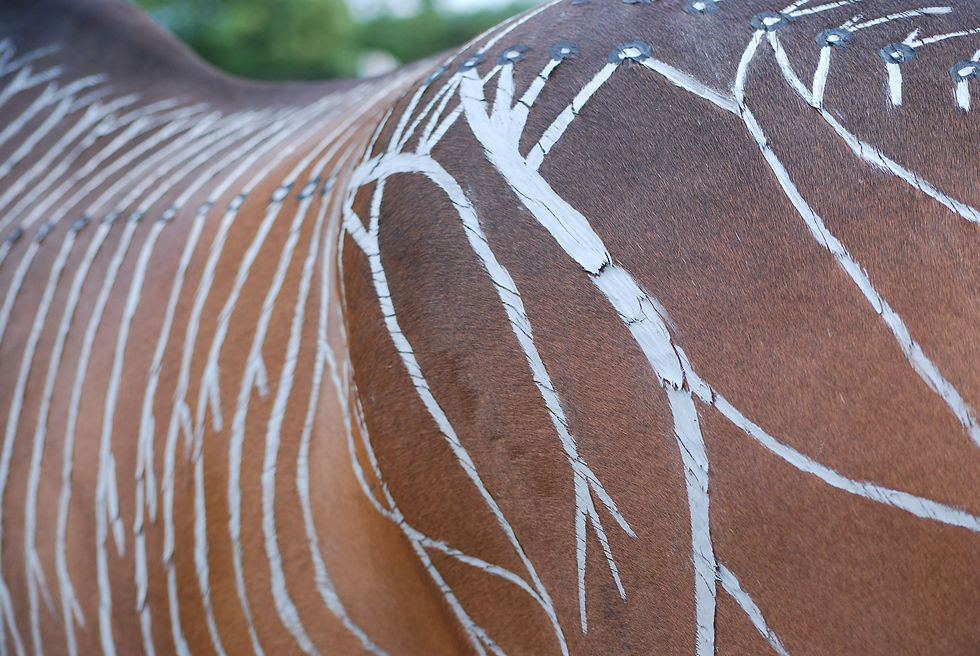
Joint mobilisations send clear, gentle signals to the brain about what movements are available and safe. In rehabilitation especially, this matters enormously. A horse may be physically capable of a movement but remain guarded or reluctant because of previous discomfort. The body remembers.
By reintroducing movement in a calm, controlled way, we're not just improving physical capacity, we're rebuilding neurological confidence.
In many cases, that reassurance from the nervous system is every bit as important as the physical change happening in the tissues.
Assessment, Therapy and Training
One of the things I find most compelling about joint mobilisations is how versatile they are depending on how they're applied.
Performed a small number of times and compared from one side to the other, they're a diagnostic test. Repeated regularly over time, they become therapeutic, improving tissue health and restoring range of motion. When used consistently and thoughtfully across weeks and months, they function as a form of training, teaching the body to move with greater freedom and symmetry.

Take tail mobilisation (see pic right) as an example: gently moving the tail up and down, gradually increasing the range while feeling for fascial and sacral movement along the midline. A few repetitions as part of an assessment. Multiple repetitions regularly over time, and you're working therapeutically.
Knowledge is Key to Success
Good intent isn't enough here. To apply joint mobilisations safely and effectively, you need a thorough grounding in anatomy: the normal range of each joint in every plane, how the horse's posture affects what's achievable, and which techniques target which movements.
The horse's body is also deeply interconnected, because of extensive soft tissue connections, including the stay apparatus, it's rarely possible to move one joint without influencing others nearby. Some of the most useful mobilisations are extremely subtle and only achievable from very precise positions relative to the horse's body.
With around 205 bones and between two and five joints between each vertebra, there's a great deal to understand. That depth of knowledge is something every rider, trainer and therapist should be working towards. If we want to act as personal trainers for our horses, and I believe we should, understanding how their bodies are designed to move is key to everything we do.
Add Massage for Even Better Results

Regular followers will already know how valuable I believe massage is - it's wonderful. Massage combined with movement is better still.
We all know how our own bodies feel, after working through their full range of motion, more comfortable and freer. The same applies to horses.
Whether you learn these techniques yourself or call in a trained professional, integrating regular joint mobilisation with bodywork can make a substantial difference to long-term comfort and soundness.
Explore it further
For those who want to go deeper, my Joint Mobilisations and Musculoskeletal Testing course runs this October. This is a new online eight-week advanced training programme running from 7th October to 2nd December 2026. It's designed for equestrian coaches and therapy professionals who want a practical, anatomy-rooted understanding of how to assess and improve movement safely.
This in-depth online programme is designed to help equine therapists enhance their ability to recognise, assess, and improve joint and soft-tissue function through targeted mobilisation, stretching and strengthening techniques.
You’ll learn how to identify subtle changes in joint range, understand what “anatomically normal” movement looks and feels like, and apply evidence-based techniques to support mobility, comfort and long-term performance.
Joint mobilisations may look like small, simple movements but their reach extends across joint lubrication, soft tissue health and whole-body movement quality. When it's applied with knowledge and consistency, they're one of the most effective things we can do to keep horses comfortable, sound and moving well.


Comments