

Is there a Conflict Between Advancing Equine Welfare Whilst Optimising Performance?

Updated: Feb 7
As part of the Horses Inside Out Conference 2026, which focuses on Soundness and Symmetry, delegates will hear from leading international experts exploring how the horse’s physical balance, comfort and long-term soundness underpin both welfare and performance.
The conference asks key questions for owners, riders, trainers and professionals across the equestrian industry: how do we keep horses sound and symmetrical, and how do training, management and competition structures influence their well-being?
One of the key themes that will be covered throughout the conference is the relationship between welfare and performance. Addressing this topic at the conference on Sunday 22 February is Roly Owers, CEO of World Horse Welfare. He challenges the idea that the two are somehow at odds, drawing on a lifetime spent immersed in horses, from childhood through to elite sport and veterinary practice.
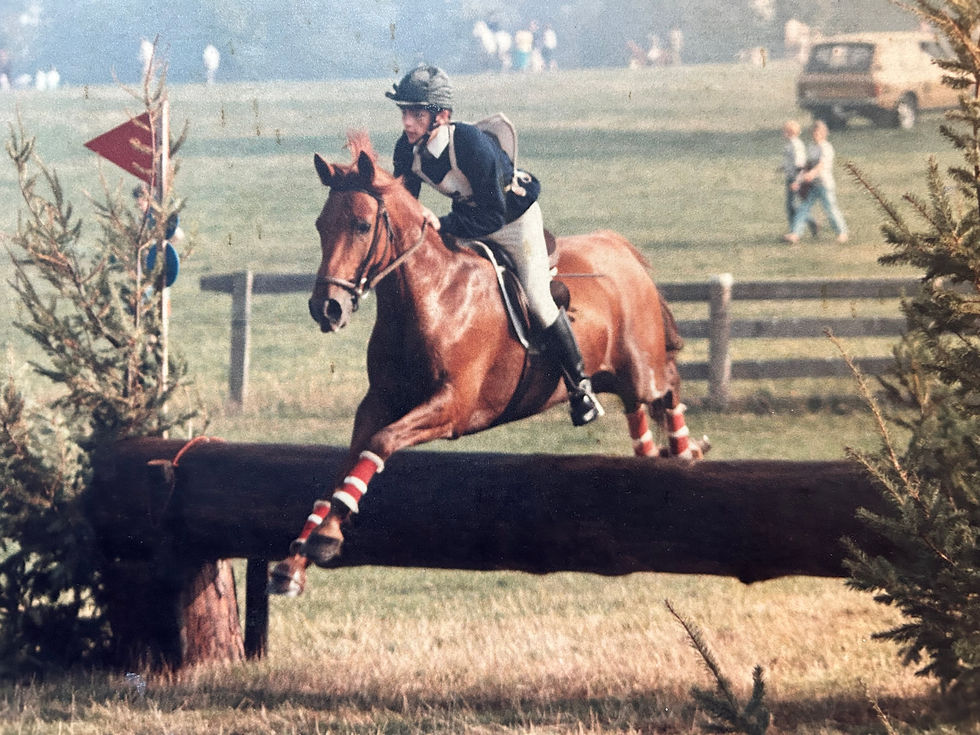
Reflecting on his own journey, Roly explains that his perspective has been shaped by early and sustained exposure to horses.
“I count myself so lucky to have had my first ride on a pony almost before I could walk, to grow up in a home where animals were very much part of the family,” he says.
His career path – studying veterinary medicine, working at the Household Cavalry Mounted Regiment and ultimately joining World Horse Welfare has only deepened that understanding. Central to it all, he believes, is the uniquely evolved relationship between humans and horses, a relationship that continues to change, particularly within the context of modern sport.
“It’s hard to think of a better example of how fast things are evolving than in the world of horse sport,” Roly explains.
The conference’s focus on soundness and symmetry aligns closely with his belief that how we define and reward performance has a direct impact on equine welfare.
What is Equine Welfare?
In addressing whether there is a conflict between providing good welfare and optimising performance, Roly suggests that the starting point must be clarity around definitions.
“We need to consider what we mean by ‘welfare’, and what we mean by ‘performance’,” he explains. Welfare science, he notes, has progressed rapidly, giving us a far better understanding of how management and training affect a horse’s mental and emotional state, as well as placing greater emphasis on the importance of positive experiences.

Importantly, welfare science already tells us a great deal about what compromises well-being, as well as what supports it. Roly highlights the well-established ‘three Fs’, friends, forage and freedom, all of which are compatible with the life of a sport horse when properly managed. He also points to the value of good learning theory and early-life management.
Trainers who really understand learning theory can produce horses capable of performing at the top level,” he explains, adding that there is growing evidence to suggest that thoughtful approaches to young horse management, such as weaning methods and timing, can pay dividends later in a sporting career.
According to Roly, many breeders, riders and trainers are already prioritising welfare to good effect. A positive association between later weaning and better racing performance has already been demonstrated, and studies carried out in horses and multiple other species suggest that animals’ confidence, resilience, and ability to learn – all attributes that are important within existing equestrian competitive structures - benefit from good welfare and early life experiences.
Redefining Performance
However, he poses a more challenging question: what if the industry adjusted its definition of performance itself? “After all, we make the rules of competition, so ‘optimal performance’ can be anything we want it to be,” Roly says. At present, performance is largely judged on metrics such as speed, power, athleticism and aesthetics. While some disciplines penalise signs of tension or conflict, others do not, creating inconsistencies in how welfare is reflected in results.

Roly suggests that redefining good performance to include the horse’s experience could be transformative. “If, in every discipline, a good performance was defined, at least in part, as one in which the horse had had a good time, what might our criteria be?” he asks.
While acknowledging that this is complex, particularly given that we currently recognise signs of unhappiness more easily than happiness, he believes it's both possible and necessary to begin.
He envisages judging criteria that reward harmony, sound biomechanics and long-term athletic health – themes that closely mirror the Horses Inside Out Conference focus on soundness and symmetry.
“We could award higher marks where the horse’s body language and facial expression suggest harmony with the rider,” Roly explains, alongside movement that protects athletic longevity and posture that allows normal physiological function.
He also points to the potential of objective measures, such as rein tension monitoring and assessments of self-carriage, to reward lightness, skill and quality of training. In this model, forceful cues, including use of whips or spurs, and behaviours indicating pain or conflict would attract negative marks.
Keeping it Real
Roly is realistic about the challenges involved. Context matters, and change would not be easy. However, he remains confident that progress is achievable. “With some imagination and determination, we could do this,” he says. Competition would still produce winners, but in some sports they might be different winners – reflecting a shift in what the industry values.
Crucially, he believes such a change would influence behaviour across the sport.
“Most competitive riders will do what they need to do to win,” Roly explains. “So if we want to optimise both welfare and performance, we need to think carefully about how the performance goalposts are set.”

So, is there truly a conflict between advancing welfare and optimising performance? Roly’s answer is measured but clear. “No, not necessarily,” he concludes. Any potential conflict, he argues, becomes far easier to avoid when good performance is defined by more than just results, and when it includes listening to what the horse is telling us about their comfort, soundness and enjoyment.
Do you agree with Roly? Let us know in the comments.
Fancy joining the debate and see how we can change and shape the future of horses in sport? Why not come along to the conference (21-23 February 2026) and find out more.
There are limited in-person tickets available or you can watch via our live streaming. The more we can learn, the better the future will be for our horses.


I love this idea. It reminds me a little of US Pony Club Rallies of the 80's. We were judged not only on dressage and jumping but also on stable management and horsemanship--were the horse fed and watered, tack clean, etc. While the measures we're discussing would be different, the model could serve as a precedent for having competition going beyond speed, accuracy, etc. Maybe a place to start is by offering 'events' that have this more inclusive ethos? It could serve as a testing ground and eventually could be expanded outward. My main interest these days, is not in competition but improving my horsemanship and having a better relationship with my horses and helping them have happy, healthy lives--bu…
What an exciting vision!