

Getting the Correct Canter Lead

If you've ever sat on a horse that just won't pick up the correct canter lead or one that gets it beautifully to the left but struggles every time you ask to the right, you'll know how frustrating (and puzzling) it can be. It's one of the questions I get asked about a lot, so in this article I’m going to unpick this problem: why it happens, how to identify what's really going on, and the exercises that can help fix it.

As always when it comes to training issues and horses, it’s a case of working through the puzzle logically, one piece at a time.
Step 1: Is It You, or Is It the Horse?

The first and simplest question to ask is whether struggling to get the correct canter is happening with every rider, or just with you?
Pop a different rider on, ideally someone more experienced, and see if it makes a difference. Sometimes canter lead problems are genuinely about the way the rider is asking: their balance, their positioning, the timing and clarity of the aid. It doesn't mean you're doing anything "wrong" as such, just that it's worth ruling in or out.
The next test is to take the rider out of the equation altogether. Lunge the horse. Can they pick up the correct canter lead on the lunge, without anyone on board interfering with their balance? This is really telling. If a horse naturally struggles to get the correct lead on the lunge, it's going to be even harder for them with a rider onboard. On the other hand, a rider can sometimes help by supporting the horse's balance and positioning, and enable them to get the correct lead when they couldn't manage it alone.
If a horse can get the correct lead on the lunge, unaided, that's a good sign. It tells us something important about what their body is capable of.
Step 2: Analyse the Canter
Here's where I think a lot of riders miss a trick. It's not just about whether the horse picks up the correct lead. It's about what that canter looks like once they're in it.
I'd really encourage you to properly analyse it.
Do they maintain the canter, staying forward and in balance?
Are they able to stay upright through the turns while keeping the correct lead?
Do they go stiff in the canter, without really moving through their backs?
Do they tend to go four-time, or have a lateral canter?
A lateral canter is where, instead of the diagonal pair of legs landing together as they should, the front leg of that diagonal pair lands fractionally before the hind leg. In effect, you end up with the outside hind and outside fore, then the inside hind and inside fore, a lateral gait that starts edging towards a pacey type of movement. Horses often do this when they don't want to move through their backs, perhaps they're avoiding lateral movement or avoiding the rock.
That rocking motion is one of the defining qualities of canter. The body rocking from the forehand to the hindquarters, something we simply don't see in walk or trot. If a horse is unwilling to load weight onto the forehand, or onto the hindquarters, that can be a real indicator of discomfort somewhere.

Understanding how to properly assess canter is so important, and it's something I go into in much more depth in the on-demand recorded webinar The Biomechanics of Canter, and also in Anatomy in Action and the book Posture and Performance. Often, people spot the obvious problem, "he won't pick up the right lead" but they don't spot the more subtle one: that the quality of the canter itself is reduced. Whether that's the gait going four-time, going lateral, the horse being on the forehand, unwilling to bend, not moving through the back properly, going crocked or not achieving the correct bend, all of these can be signs that the problem isn't really about getting the correct lead at all. It might just be a symptom of something else going on entirely.
Does the Horse Stay in Canter?
Once a horse has picked up the correct lead, what happens next is just as telling. Do they:
Stay in the correct canter?
Change behind, becoming disunited, then change back again?
Keep coming back to trot, unwilling to stay forward in the canter?
All of these are further indicators that the horse is uncomfortable. This is where canter gets interesting, because a horse can be perfectly happy in walk and trot, and only have issues once they get to canter. So, we must ask, what is it about canter that's different?
What Makes Canter Unique
There are a couple of things that make canter unusual compared to the other gaits:
It's the only gait where the horse rocks from forehand to hindquarters with every stride, a completely different distribution of weight and balance to anything in walk or trot.
It's the only gait where we see lateral flexion and extension of the lumbosacral junction in the back, with every single canter stride.
So, if a horse is genuinely unwilling to pick up correct canter, it might not be "about canter" at all, it may be that they're unwilling, or unable, to move freely through the back. It’s this that changes how you approach the whole problem.
Check Both Reins
It's also worth asking: how good is their easier rein? Are you looking at a horse that's generally comfortable and happy to canter, just not on one particular lead, or is canter uncomfortable on both reins? This assessment matters, because only once we truly understand the biomechanics of our horse's gait can we truly assess what's going on.
Balance and Bend
To pick up the correct lead, the horse needs to be in good balance. We're often told that a horse needs to be bent to the inside to get the correct lead, and that's true to an extent but I very often see horses that are bent too much to the inside, with too much reliance on the inside rein. Focusing on the outside aids and keeping that feeling of the horse staying upright through the outside shoulder, is really important for helping maintain correct canter.
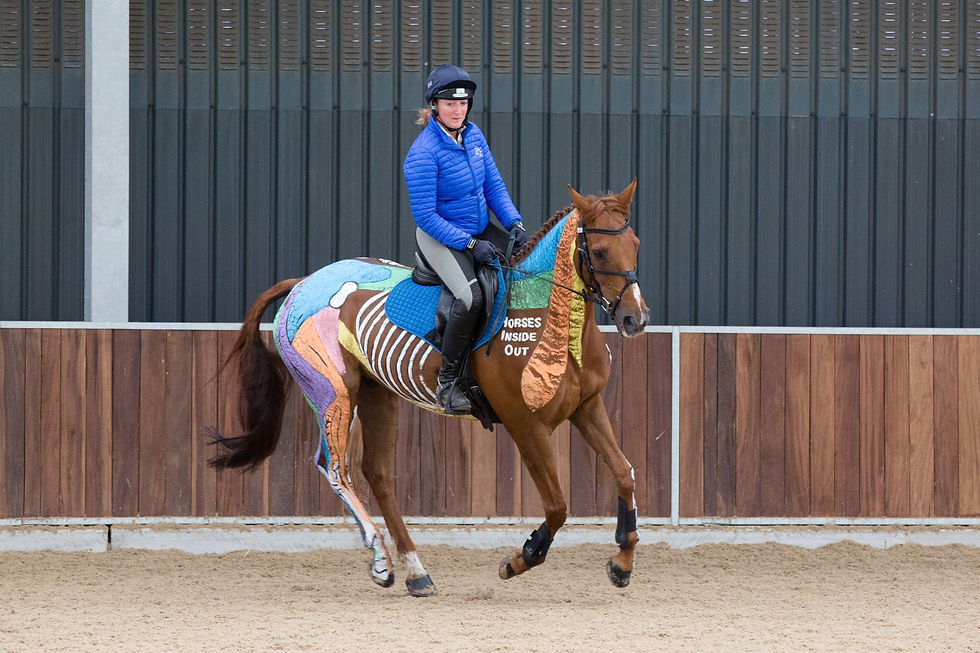
We do want bend, and if a horse is really unwilling to bend, that can be a reason for canter problems, but that bend needs to be balanced against straightness, without the horse falling out through the shoulder.
Exercises to Help
1. Trot circle into leg-yield
Trot a small circle (around 10m) at X, or somewhere on the centre line, then leg-yield out onto a larger circle and ask for canter from the leg-yield. This is particularly good if the horse is unwilling to bend, and the lack of bend seems to be behind the lack of correct lead.
2. Test the open side against the closed side
Try asking for the transition in different places to work out why the problem is happening. For example, in a 20m x 40m arena, ride your small circle on the centre line, leg-yield out to the larger circle, and then try asking for canter at X (the "open" side) versus at C (the "closed" side, with a fence just ahead).
If your horse tends to fall out through the shoulder, asking for canter on the open side after the leg-yield will likely make things worse, but riding towards the fence can really help, because it discourages that fall-out and keeps the outside shoulder upright.
3. Ride straight towards the fence
Similarly, try riding straight across the short side of the arena, almost as if heading directly for the fence, then turning and rebounding off it at the very moment you ask for canter. Using the fence like this can help keep the horse's outside shoulder up, and it's well worth experimenting with to see if it makes a difference.
This is something we've worked through with my own pony, Pumpernickel. Getting the correct right lead has always been a challenge for him. On the lunge, we've found that if we ask for canter as he's heading towards the fence, he's much more likely to pick up the correct lead than if we ask on the open side, where he tends to fall out through the shoulder.
4. Backing up
If your horse does have a poor-quality canter, lateral or lacking in movement through the back, backing up is a genuinely useful exercise. It's the only other movement that replicates the flexion and extension of the lumbosacral junction that we see in canter. Used regularly, it's a great strengthening and mobility exercise for the back, and it directly targets the very thing canter demands.
5. Voice aids and groundwork
Spending time teaching a horse voice aids on the ground is enormously useful. If, on the lunge, your horse properly understands "canter on," they'll understand you're asking for canter, not just a bigger trot. This is especially valuable for horses who tend to run into canter rather than stepping up into it: the groundwork gives them a clear concept of what canter means.

6. Energy and balance
Sometimes the issue isn't bend or shoulder position at all, it's a lack of energy and impulsion. The trot is too small, there isn't enough energy, and when canter is asked for, the trot just gets bigger and starts to run. That's a lack of longitudinal balance, as opposed to the lateral balance issues we talked about earlier.
Correct use and understanding of half-halts really come into play here. Fundamentally, what we're trying to do with all these exercises is set the horse up for a positive result, there's no point repeating a transition over and over and simply ingraining the bad habit. We want the horse to have the correct amount of energy and the correct amount of balance to succeed, as well as being strong and comfortable enough in their body to do it.
7. Counter canter, for strengthening and confidence
Once your horse has got the hang of picking up the correct lead, it's worth playing with counter canter for strengthening. Pick up canter on the lead they find easiest, change the rein across the long diagonal, trot in the corner, and then pick up the correct canter from there.
When It's Not About Training at All
If, after all of this your horse still isn't picking up the correct lead, we need to ask ourselves why. Fundamentally, this can come down to their well-being and discomfort: pain through the sacroiliac region, in their back or feet. There could be a whole host of reasons, and it's really important to get it properly investigated rather than continuing with training.
Further Learning
If you'd like to go deeper into understanding exactly what's happening in your horse's body through canter, I'd really recommend the on-demand recorded webinar The Biomechanics of Canter, along with Anatomy in Action and Posture and Performance. These will give you a much clearer picture of why canter is such a unique and demanding gait, and how to help your horse find it easily, comfortably, and correctly, on both reins.


Comments