

Are Acoustic Ear Covers for Horses Effective?


Our Snippets of Science series with Independent Consultant Dr Sue Dyson takes a closer look at equine research and reveals what the science really tells us. In this article, Sue looks at how effective acoustic ear covers really are or is it clever marketing?
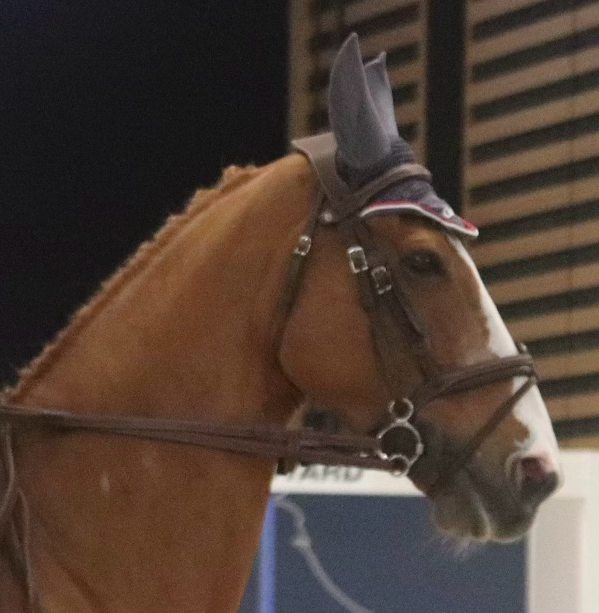
It has become fashionable, particularly in competition, for riders to put ear covers on their horses. They may also be called earmuffs, ear bonnet, ear veils, acoustic ears, a soundless ear bonnet, an acoustic fly hood. The specification of different ear covers varies considerably, as does their price. The big question is, to what extent do they remove or reduce sound?

The manufacturers’ claims
Before we look at the research, let's take a moment to look at some of the marketing claims. I've highlighted some of the key points that we will look at in more detail.
‘Decrease sharp sounds and improve your horse's relaxation and concentration with this peak-performance acoustic hood’
‘Soft, comfortable ears with acoustic lining provide reliable protection from loud sounds and distractions, ideal for aiding concentration during training and competition, with dense soundproof micro-foam that absorbs noise.’
‘Bamboo lining, dense soundproof layer, acoustic elastane covering’
‘Dense, sound-proof micro-foam ears protect your horse’s ears from noise.’
‘Use quality materials to muffle sharp sound. This aids your horse’s focus and relaxation. Are breathable and ventilated.’
‘When the horse’s hearing is reduced they depend more on the rider for direction in terms of touch and listening to other aids.’
‘Ideal for sensitive horses or those working in busy environments, our ear covers help promote calm, focused performance. Made from breathable, stretch fabrics for a secure yet gentle fit.'
‘Triple-layer soundproof ear panels for noise reduction.’
‘The advanced layering system dampens disruptive sounds, making it ideal for sensitive horses or young horses in busy environments.'
‘Protects your horse’s ears due to the soundproof fabric (100% polyester)’
‘The neoprene ears cuts out the noise and is very useful for young, spooky horses.’
‘Dense sound proof foam absorbs sharp and loud noises.’
‘Improves focus, reduces fatigue and enhances energy.’
‘Comfy neoprene that covers and lines their ears, they not only help soothe, dampen and absorb ambient noise and improve focus and concentration.'
‘Superior airflow to keep horse cool.'
The soundproof ears are slightly thinner than the ones of other brands, which offers a perfect fit and don’t slide off. They remain equally soundproof. Therefore the horse doesn’t get distracted by noise.’
Ear covers ‘reduce sharp noise’

What does sound proofing mean?
That's quite a list of claims but to what extent are they justified and are there any down sides to using so-called ‘acoustic ears’?
According to the Oxford English Dictionary sound proofing means preventing, or constructed of material that prevents, the passage of sound.
Collins Dictionary defines soundproof as to prevent all sound getting in or out.
Lots of Questions
Do any ear covers obliterate all sound? Have the materials been tested? Is sound reduction influenced by the frequency of sound, bearing in mind that horses can hear ultrasonic sounds that are beyond the hearing range of people? What is meant by ‘sharp’ noise or sound? Is there any evidence, other than anecdotal reports from riders, that ridden horse behaviour is influenced using ‘acoustic ears’? What is ‘superior airflow’? So many questions!
Ear covers, horse comfort and bridle stability

Horses’ heads vary hugely in size and shape. Most ear covers are available in several sizes, for example, pony, cob, horse but this doesn't consider the variable distance between the ears in horses of similar overall size.
User surveys have indicated the use of ear covers may result in instability of the bridle, even to the extent that if a horse vigorously shakes their head, both the ear covers and the bridle may come off! Dressage stewards have commented on hot, sweaty ears under ear covers.
It's also important to consider that if a bridle fits correctly the addition of ear covers under the head piece and browband may induce tightness and pressure points may be created by seams or piping on the ear covers.
Do ear covers obliterate or reduce sound?
Now, let's take a closer look at a recent study that may answers some of the many questions we have. This study investigated if horses reacted to different sounds and whether there was any difference if horses were wearing noise reducing ear covers [1].
Eighteen horses, 15 of which had been exposed multiple times to competition environments, were presented with five sounds commonly heard in competition or stable environments. Each one was played for 20 seconds, both with and without ear covers, in a randomised order. Behavioural and heart rate responses were recorded.
The sounds included the whinny of an unknown horse which was repeated four times within the 20 second period, applause (a crowd clapping and cheering), trotting on a firm surface, music (We are the Champions by Queen) and food (nuts being scooped into a rubber feed bowl).
The horses were standing in a stable, held by an experienced familiar handler, facing the back wall to minimise visual stimuli. All the horses were used to wearing ear covers. The ear covers, which were marketed as reducing responsiveness to noise, had a cotton mesh headpiece and three layers of material covering the ears (an inner and outer layer of cotton and a middle layer of ‘technical soundproof material’).
Behavioural responses and heart rate measurement
Video recordings of the horses’ behavioural responses were reviewed blindly to determine whether:
Ears were moving backwards or forwards
The neck was lowered or raised
The eyes were focused and alert
The horse turned its head towards the sound source with the ears forward
The presence of flaring nostrils
Raising the tail
Vocalisation
Eyes widening with exposure of the sclera
Defaecation
Movement towards or away from the sound.
Also, the average and peak heart rates were determined for each sound, both without and with the ear covers.
Responses to sounds compared with baseline
Without ear covers all sounds provoked a significant increase in peak heart rate compared with the resting heart rate; the peak heart for trot was higher than for other sounds. The average heart rate increased for trotting, feed and whinny.
These results indicated that horses could discriminate among sounds. A variety of behavioural responses to the different sounds was noted.
The effects of ear covers
Comparing the two sets of results - without and with ear covers, overall, for all sounds considered together, the average heart rate was lower with ear covers. However, there was only a significant difference in the average heart rate for food, and not for the other sounds.
There was an overall difference between ear covers and no ear covers for the presence of behavioural responses for all sounds together, with fewer behaviours elicited when wearing ear covers. The total frequency of behaviours for ear covers and no ear covers was significantly different for trotting, applause, and feed, with no ear covers producing more behavioural responses for each of these sounds.
What do the results tell us?
There was an overall difference in both physiological and behavioural responses with and without ear covers, with a reduction in responsiveness when wearing ear covers, although responses varied among the sounds presented. This implies a reduced perception of sounds with varying levels of effectiveness. However, we cannot conclude that sound was necessarily reduced. It's possible that the acoustic ears create ‘white noise’ by movement against the ears. The results apply only to the brand of ear covers tested.
We could speculate that based on these results wearing ear covers could potentially reduce stress or improve the focus and attention of a horse on its rider in a training, competition, or prize-giving environment, but the environmental stimuli in the ‘real world’ are much broader than those in the test environment. It must also be recognised that not all ‘acoustic ears’ are the same with respect to their construction. Not all ear covers include proven sound attenuating material. Moreover, the study did not include any ultrasonic sounds which horses may hear but people do not.

Let’s go back to some of the manufacturers’ claims. ‘Soft, comfortable ears with acoustic lining provide reliable protection from loud sounds and distractions, ideal for aiding concentration during training and competition, with dense soundproof micro-foam that absorbs noise.’; ‘bamboo lining, dense soundproof layer, acoustic elastane covering’; ‘Dense, sound-proof micro-foam ears protect your horse’s ears from noise.’; ‘use quality materials to muffle sharp sound. This aids your horse’s focus and relaxation. Are breathable and ventilated.’; ‘When the horse’s hearing is reduced they depend more on the rider for direction in terms of touch and listening to other aids’.
Is there any evidence to support the thesis that reduction of hearing will make a horse more reliant on a rider’s cues? Remember that horses are prey animals. It is important for horses to be aware of their environment so that they can react appropriately. If a horse can hear a noise, then they can identify and localise a real threat.
However, if ear covers reduce the volume or distort the sound and a horse cannot figure out where the sound is coming from, might this provoke anxiety? The work did not investigate the volume of sounds so we do not know if a horse may react differently to the same sound at different volumes.
The purpose of this article is not to discount the potential value of ear covers, but to make riders aware that manufacturers’ claims are not necessarily validated. It's easy to follow fashion, but if bridle fit and thermoregulation and therefore the horse's comfort is compromised do the advantages outweigh the disadvantages? What do you think? Let us know in the comments.
References
1. Hole, C., Murray, R., Marlin, D., Freeman, P. Equine behavioural and physiological responses to auditory stimuli in the presence and absence of noise-damping ear covers. Animals 2023, 13, 1574. https://doi.org/10.3390/ani13091574


Comments